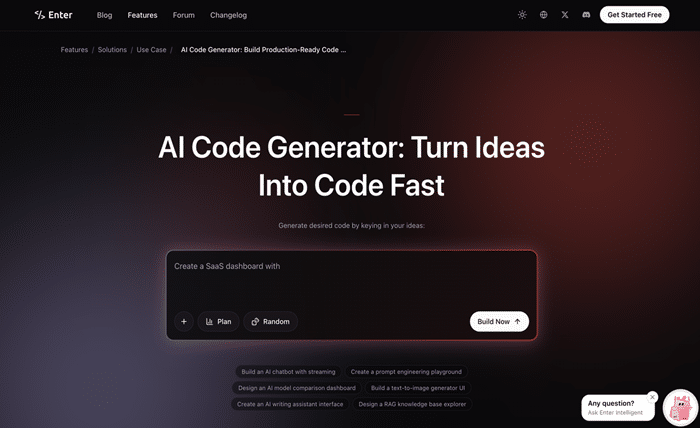
There is a pitch that gets made in startup circles with remarkable regularity and remarkable consistency in how it ends. The product solves a problem that every business has. The market is enormous. The total addressable market slide in the deck has very large numbers on it. The founder has identified something that any company of any size in any industry could benefit from, and they have built their product accordingly, with features broad enough to serve the widest possible range of potential customers.
The product launches. The initial interest is genuine. The early signups come from a diverse range of businesses in different industries with different sizes and different contexts. And then the product tries to serve all of them and succeeds at serving none of them particularly well. The customer success conversations reveal that each customer type needs something slightly different. The feature requests pull the roadmap in incompatible directions. The marketing messaging that tries to speak to everyone resonates with no one specifically enough to drive the kind of conversion that the total addressable market slide promised.
This is the everybody problem in SaaS, and it is one of the most common failure modes for products built by founders who confused the size of a potential market with the accessibility of that market to a specific product with a specific positioning. The founders who avoid it are the ones who understood early that the path to a large market runs through a small, specific, well-served niche rather than across a broad, vaguely defined category. A code maker makes building fast enough that the temptation to build for everyone before finding product-market fit with someone specific is more dangerous than it has ever been because the speed of building amplifies the cost of building in the wrong direction. Enter Pro has been genuinely useful for founders who understand this distinction and who are building with the discipline that specific positioning requires.
Why Broad Positioning Fails to Convert Anyone Specifically
The conversion dynamic of a SaaS product with broad positioning is fundamentally different from the conversion dynamic of one with specific positioning and understanding the difference is the key to understanding why broad positioning consistently underperforms despite the intuitive appeal of reaching the widest possible audience.
A potential user landing on a broadly positioned product page reads a description of features and benefits that are relevant to many different types of users in many different contexts. Nothing in the description is specifically wrong for them. Nothing actively disqualifies them. But nothing speaks directly to their specific situation either. The copy describes what the product does without communicating a clear picture of who it is for, which means the visitor has to do the work of figuring out whether they are the right user rather than immediately recognizing themselves in the product description.
The visitor who has to do this work is less likely to convert than one who lands on a page that immediately and specifically addresses their situation. Not because the broadly positioned product is less capable but because the burden of judgment has been shifted from the product to the visitor and visitors who have to make that judgment themselves are more likely to defer the decision than visitors who are told clearly that this product is for people exactly like them.
The Specific Customer Who Changes Everything
Every SaaS product that has found genuine product-market fit has a specific customer type at the center of it. Not a persona assembled from demographic data and assumed preferences but a real and specific type of person with a real and specific problem in a real and specific context whose needs the product was built to address with genuine understanding of what those needs actually are.
The founder who can describe this specific customer in enough detail to write the copy on the marketing site from their perspective, to anticipate the questions they would have before trying the product, and to build the onboarding experience around the workflow they actually use rather than a generic user journey, is building with a precision that broad positioning fundamentally cannot match.
Finding this specific customer is not primarily a research exercise. It is a process of progressive specificity that starts with a general sense of who might have the problem the product solves and narrows through genuine conversation with real people in that general category toward the specific type of person for whom the problem is most acute, most frequent, and most worth paying to solve.
Building Focused Features for a Specific User Type
The feature decisions of a SaaS product built for a specific user type are fundamentally different from the feature decisions of one built for a broad market and the difference is not just in what gets built but in how the decisions get made and how quickly they can be validated.
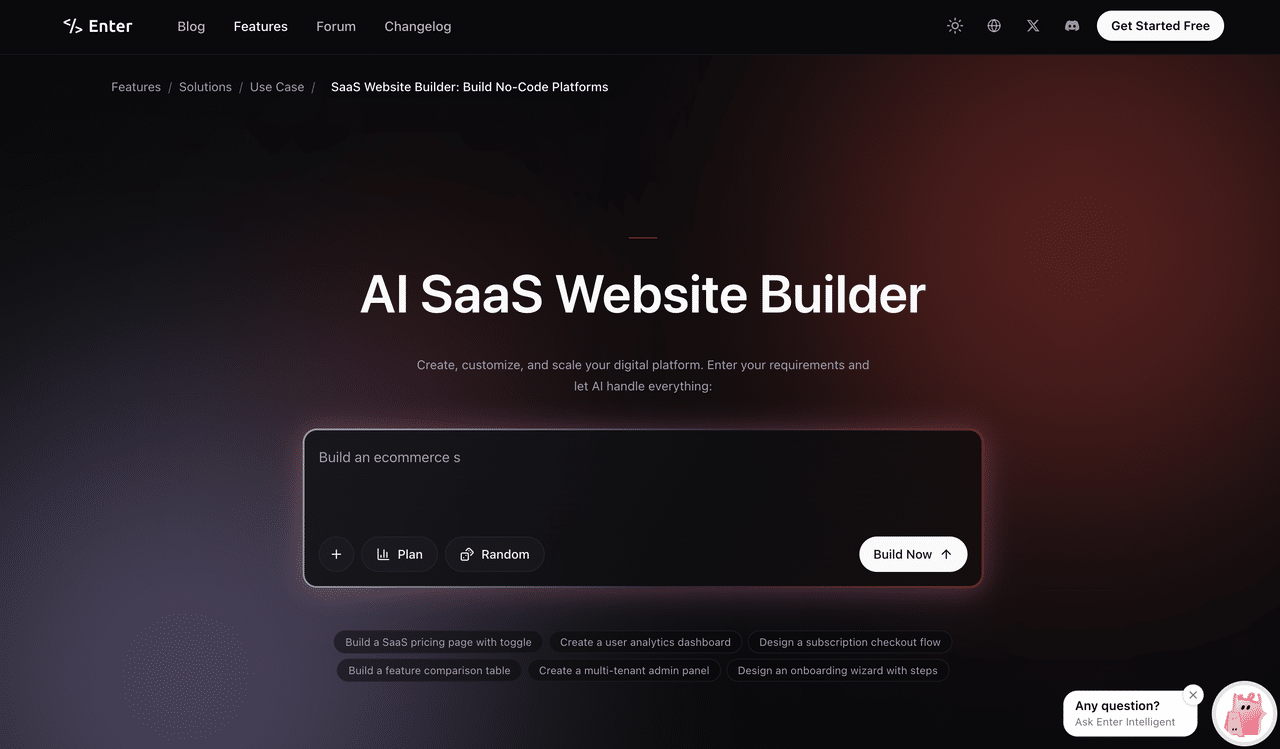
A SaaS website builder that is marketed to a specific type of user generates feature feedback from that specific user type and that feedback has coherence and a directionality that feedback from a diverse and broadly defined user base cannot. The specific user type has consistent workflow requirements, consistent integration needs, and consistent definitions of what good looks like that make feature decisions relatively straightforward compared to the feature decisions of a product trying to serve users with fundamentally different needs simultaneously.
Enter Pro gives founders building for specific user types enough flexibility to build the marketing site and the product experience around that specific user’s language, workflow, and success criteria rather than around the generic user journey that broad positioning produces. That specificity is visible in the conversion rates of marketing sites built for someone specific versus someone general and the difference is significant enough to matter commercially from the first month of operation.
Saying No to the Wrong Users Without Apology
One of the most counterintuitive disciplines that specific positioning requires is the willingness to explicitly exclude users who are not the right fit for the product rather than accepting everyone who wants to sign up and trying to serve them all.
The wrong user is not just a user who will not get value from the product. They are users who will generate support requests that pull the product in the wrong direction, feature requests that dilute the roadmap, and churn that produces misleading signals about why users are leaving. The wrong user who churns after two months because the product was not designed for their use case generates the same churn signal as the right user who churned because the product failed to deliver on a genuine promise and the two signals require entirely different responses.
A marketing site that clearly defines who the product is for and, implicitly or explicitly, who it is not for reduces wrong-user signups without reducing right-user signups because the right user is more attracted to a product that clearly understands their specific situation than to one that claims to serve everyone. Clarity about fit is a feature for the right user even when it feels like a limitation from the product’s side.
The Niche That Becomes a Platform
The specific positioning that allows a SaaS product to find its initial market and build genuine product-market fit with a defined user type is not necessarily the final positioning of a business that grows beyond its initial niche. The most interesting SaaS growth stories are often ones where a product found deep product-market fit with a specific niche, dominated that niche completely, and then expanded from that position of strength into adjacent niches where the core capability remained relevant but the specific application required extension.
This expansion from niche dominance is fundamentally different from the broad market positioning that fails at launch. The product that dominates a specific niche before expanding has validated that it can build something genuinely excellent for a specific user type, has built the operational and product capabilities that specific excellence requires, and is expanding from a position of demonstrated capability rather than claimed potential.
The founders who understand this path treat their initial niche not as a limitation they are stuck with but as the foundation they are building from and the discipline of serving that niche exceptionally well before expanding is the same discipline that will be required to serve the adjacent niches they eventually expand into.
Distribution That Works for Specifics Rather Than General
The distribution channels that work for a specifically positioned SaaS product are different from the channels that broad market positioning would suggest and they are almost always more effective per dollar and per hour of effort than the broad channels that seem more natural for a product claiming to serve everyone.
A product for a specific professional community can be distributed through the channels where that community already gathers. The publications they read, the events they attend, the online communities where they discuss their work, the influential voices whose recommendations they trust. These channels are more targeted, more credible, and more cost-effective than broad digital advertising aimed at a demographic approximation of the intended user.
The founder of a specifically positioned product who participates genuinely in the community they are building for has access to distribution that no amount of advertising spend can replicate because the credibility that genuine community participation builds is qualitatively different from the awareness that advertising creates. That distribution advantage is one of the most commercially significant benefits of specific positioning and it is available only to founders who have committed to a specific user type rather than hedging across a broadly defined market.
Conclusion
The everybody problem in SaaS is not solved by building more features, by spending more on marketing, or by finding a better way to explain a product that is trying to serve everyone. It is solved by making the decision that most founders resist making because it feels like leaving money on the table. The decision to be for someone specific rather than for everyone generally. That decision does not reduce the eventual market opportunity for a product with genuine capability. It creates focused execution, coherent positioning, and the specific user understanding that are the prerequisites for reaching a large market from a position of strength rather than attempting to serve a large market from a position of undifferentiated adequacy that no specific user has a compelling reason to choose.